Faster Cheaper Polymaker Reusable Spool
by Foreverwinter · via Printables
| Format | STL |
| Category | Art |
| License | Public Domain (CC0) |
| Triangles | 29.5k |
| Uploaded | Nov 17, 2025 |
⬇ 527 downloads
❤ 107 likes
👁 1.6k views
Description
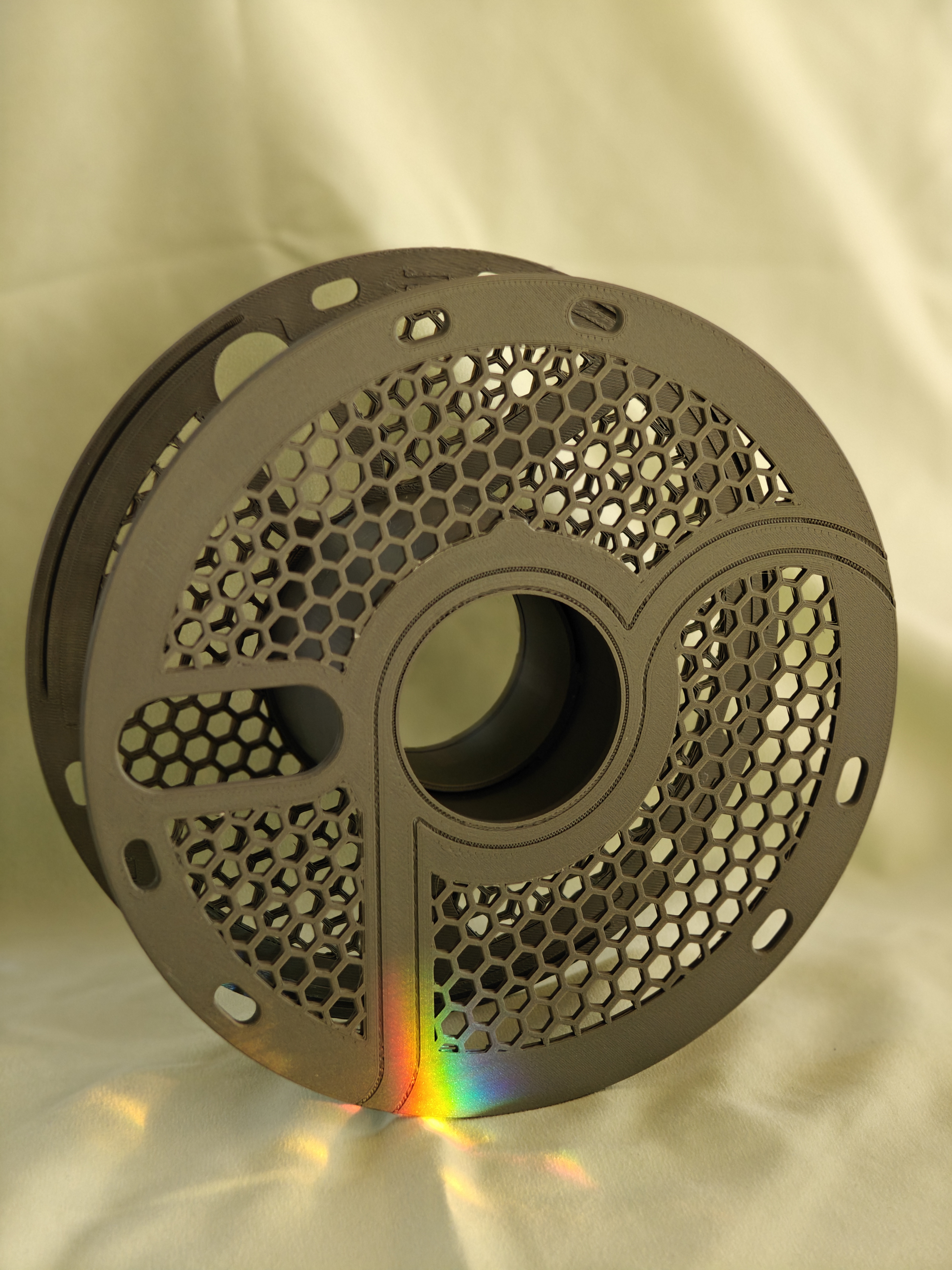
The Polymaker Reusable Master Spool is great, but having the holes modeled into the part means the slicer has to create a lot of perimeters (which makes for slow printing). The slicer is optimized for creating sparse infill patterns that we can use to improve print speed dramatically (same print time as the solid version of the Polymaker spool), and it has the side benefit of using 15% less material (saves about $1 if printing in ASA) If you want to use 25mm RFID tags (such as the MIFARE 1k) check out my other remix: https://www.printables.com/model/1484265-polymaker-reusable-spool-for-25mm-rfid-tags You will need to do the following in your slicer to get this to print as intended: Split each STL into “parts” Keep the settings for the large pieces as you normally would For the thin parts (it should be the ones with “_2” in the part name within your slicer), set the following parameters: Wall loops: 0 Top shell layers: 0 Bottom shell layers: 0 Sparse infill density: 20% Fill multiline: 2 Sparse infill pattern: Honeycomb You can play around with different infill patterns if you want it to look different, but I like the classic honeycomb look and the print time/material usage seems pretty good. If you have and AMS or equivalent you could even try making those parts a different colour for an extra awesome look! Huge thanks to @Polymaker (and those who contributed) for the awesome spool design, for including a STEP file, and for having licensing terms that allow remixing etc. You rock, and so does your filament! --- Update 2025-11-15 The original version had strength problems where the honeycomb meets the solid parts. V2 addresses this by sandwiching the honeycomb in between the solid part for a couple of mm and works much better. It now prints even faster than the original solid version and is a lot stronger. Lessons Learned: I originally thought the “alternate extra walls” setting would be enough to get good bonding between the pieces, but turns out it was inadequate… hence why the new V2 version with the “sandwich method”
Originally published on Printables