Neumann O 470 console speaker enclosuare
by pgreendale · via Thingiverse
| Format | STL |
| Category | Other |
| License | CC BY-SA |
| Triangles | 1.0k |
| Uploaded | Apr 10, 2026 |
⬇ 7 downloads
👁 19 views
Description
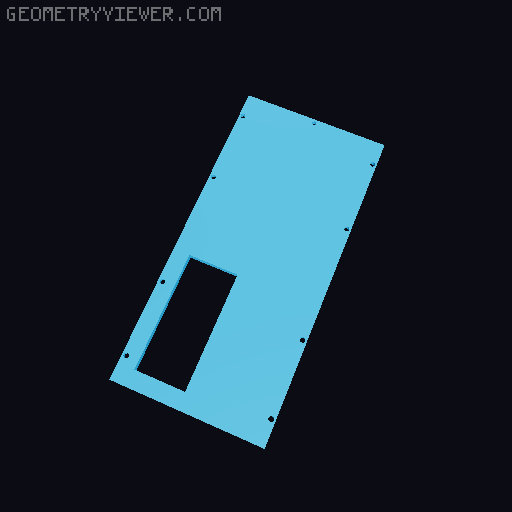
This thingie is a housing for the Neumann O47 in-console speaker to use it standalone monitor or desktop speaker. First the speaker provides originally a Tuchel T2701 connector on its back. Mating connectors are expensive, if you intend not to use it in a mixer console in the future, you can use the backplate here as a replacement. A through-panel mount 5.5x2.5mm barrel connector plus a standard 3.5mm jack insert (CLIFF FCR1281, I intend it to use it with mono). The main case fits rather tight, you may print it at 0.1% oversize to have less stress during installation. Screwholes are 2.7mm for self-cutting metal screws. Pinout I dont know if there were more than one configuration of the backend connector, so thats at least the pins I worked out to make it functional for me. The Unit I had a label for Deutschlandfunk (radio station). Tuchel pin (inner) cable color function goes where? 1 Metal GND Via 10k Resistor to Audio GND (optional) 3 pink/blue audio input transformer 1 Audio in GND 4 pink/green audio input transformer 2 Audio in Signal 20-22 thick blue Power negative input Barrel Jack outer (- / GND) 17 thick red Power positive input Barrel Jack central (+24V) 8-9 thick blue Speaker (-) Connect to blue LS out from PCB (pins 10-11) 10-11 thick blue Amp (-) out Connect to blue cable to LS (8-9) 12 thick red Speaker (+) Connect to red LS out from PCB (13) 13 thick red Amp (+) out Connect to red cable to LS (12) Powering The unit needs 24V, I am currently using a programmable power supply, but design goal is to use some 24V DC Power Supply like MeanWell GST36E24-P1J , Unit draws about 0.5A but has a heavy startup surge due to capacitor loading, ensure that your power supply can handle that and don't go into overcurrent mode. Final touch The Neumann unit was designed to be integrated into mixing consoles. Having it standalone (free around) means there is no surface around to be used for acoustic dissipation. The Speaker design is a closed box, so thats fine but dont expect too much from it. I find it nice for testing or listening to some audio in the mid frequencies. That case design provided here may alter the sound a bit by its hollow construction, you could add some dampening material (compressed fabric or rock wool, depends on your taste) . The Audio transformer is around 157 Ohms DC, it was expected to work at audio impedances (200 Ohms maybe?), your Smartphone or Laptop output wont handle such impedances too well but it may be good enough for that kind of speakers. Have fun!
Originally published on Thingiverse