Redesigned Golf Counter (SCAD)
by permanentbrownmark · via Thingiverse
| Format | ZIP |
| Category | Art |
| License | CC BY-SA |
| Uploaded | Mar 1, 2026 |
⬇ 32 downloads
❤ 5 likes
👁 162 views
Description
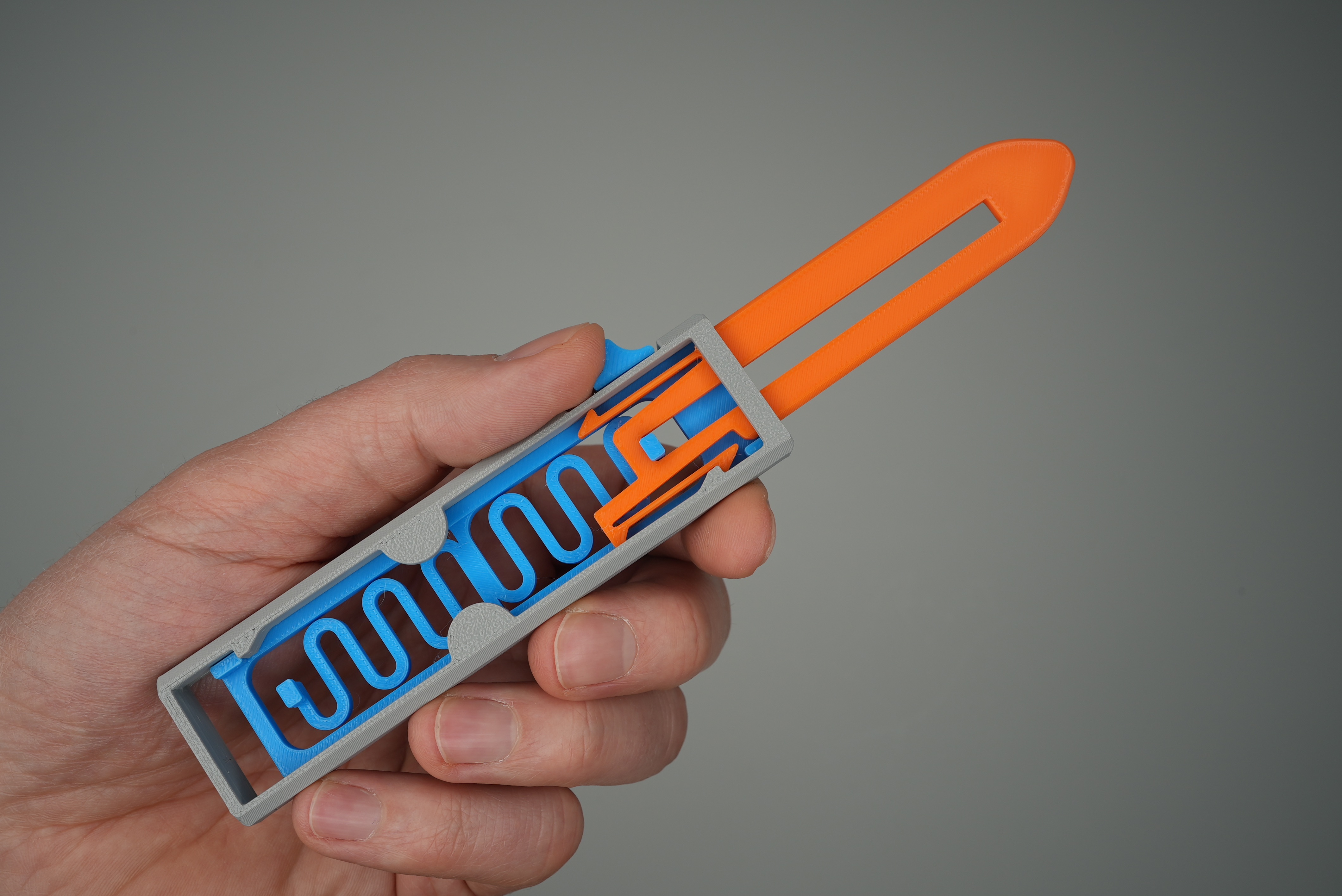
This design is based on the concept and dimensions from TV#4867466. The original model had 10 digits and 25 detent positions. That made it impossible for the digits to consistently align with the window. I had posted a hybrid STL+SCAD repair of the original model to fix that problem (TV#7199844). This file contains code from #7199844, but no data from #4867466. This redesign exists because one of the places I use these counters. I use these to keep track of the number of times a razor blade is used. They live in the shower, which doesn't seem like an issue for a doodad made entirely of plastic. The issue is something that nobody seems to acknowledge: environmental stress cracking. In a humid environment, under stress, the little detent tab simply cracks at its root and falls off while it's sitting there all by itself. To fix the detent and improve on some other complaints, I reconstructed the design in SCAD. To acommodate user preference or handedness, I've made some of the feature orientation customizable. Compared to the original design: Includes the prior fixes to ensure number/detent alignment Full SCAD design + custom block number library Improved detent geometry for (hopefully) better durability Consolidated and improved inlay option Window position can be changed Case handedness can be changed Number sequence direction can be changed There are two window positions available: "side" is similar to the original design, with the window on the keyring side of the model. "top" places the window on the upper part of the model face, which improves number spacing. There are two styles of wheels available, depending on how you want to print them: The "cut" style wheel is similar to the original concept. It consists of a wheel with deeply engraved numbers. These can either be printed and used as-is, or the recesses can be filled with paint or something. The letters can also be colored by swapping the filament color after two or three layers, using basic manual printer controls. While this "sandwich" technique is simple and requires no special slicer setup or gcode, its weakness is that deep reliefs create shadows which reduce the effective contrast (and collect pocket lint). The shallower the cuts are, the narrower the window for changing the filament becomes. If you want shallow relief, you either need to be on your toes, or you may consider adding a pause to the gcode. The "inlay" style wheel uses two STL files, and can produce a two-color wheel with flush, inlaid numbers. The process is simple. The "inlaywheel" and "inlaydigits" STL files need to be loaded in the slicer, such that they are aligned. These models include thin concentric skirts in order to prevent the slicer from misaligning the models during import. Slice the two models separately. Print the digits first, swap to a different color filament, and then print the wheel. This two-pass print-in-place method requires that the digits are no more than a single layer thick, so contrast may suffer. For best contrast, use a heavily-pigmented (e.g. black) filament for the numbers. The given STL files presume 0.2mm layers. Personally, I prefer the inlay style. It's naturally a well-ordered process, and it produces a smooth face with fewer defects. Note that neither option requires any special gcode setup or multimaterial printer capabilities to achieve two-color printing. SCAD and a comprehensive assortment of prerendered STL files are included. The preview STL is just an illustrative placeholder. Use the correctly-oriented files in the archive.
Originally published on Thingiverse