Stackable Baskets
by vivamus3d · via Printables
| Format | STL |
| Category | Organisation |
| License | CC BY-NC |
| Triangles | 120.9k |
| Uploaded | Dec 21, 2024 |
⬇ 5.8k downloads
❤ 770 likes
👁 8.5k views
Description
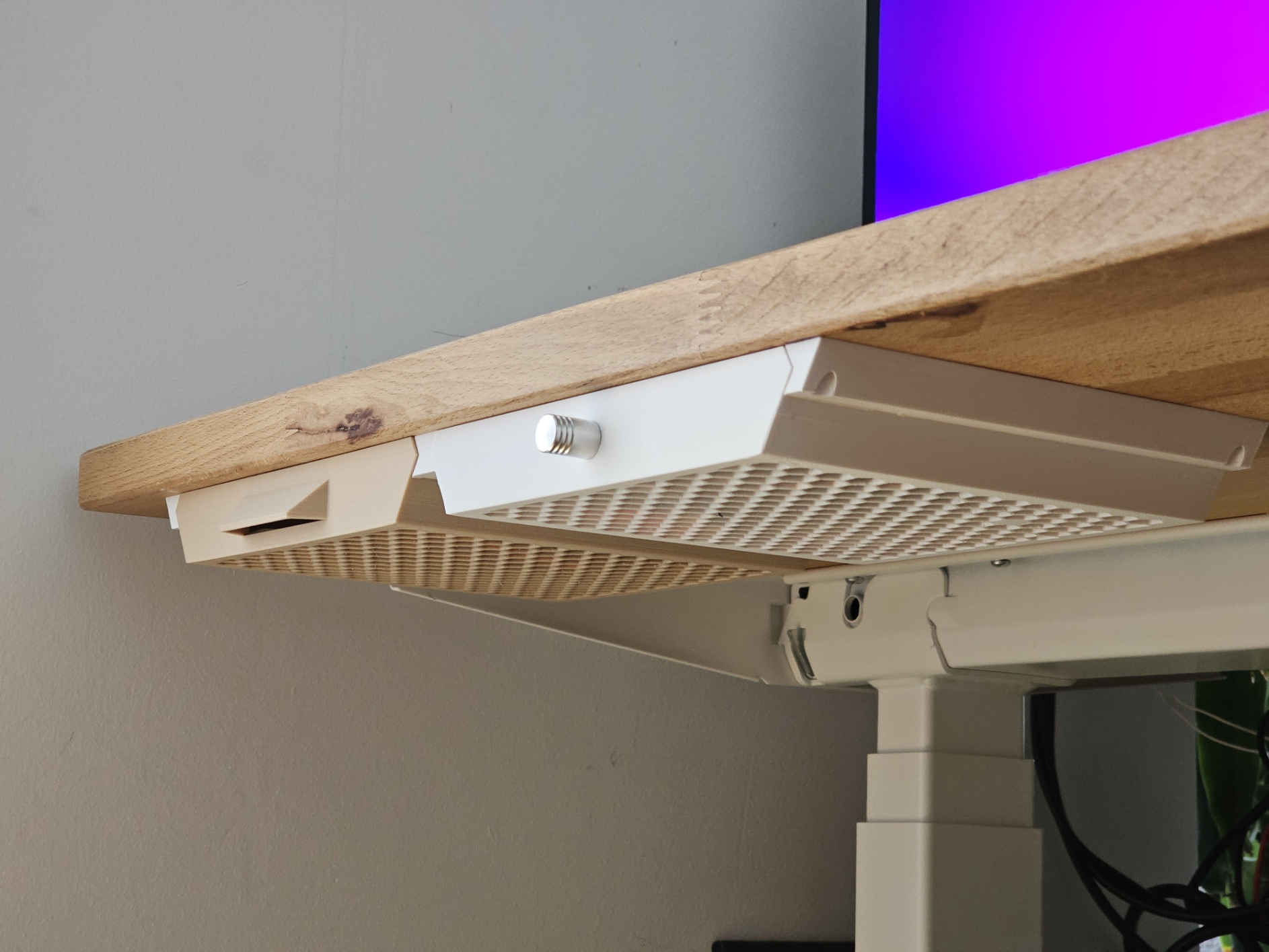
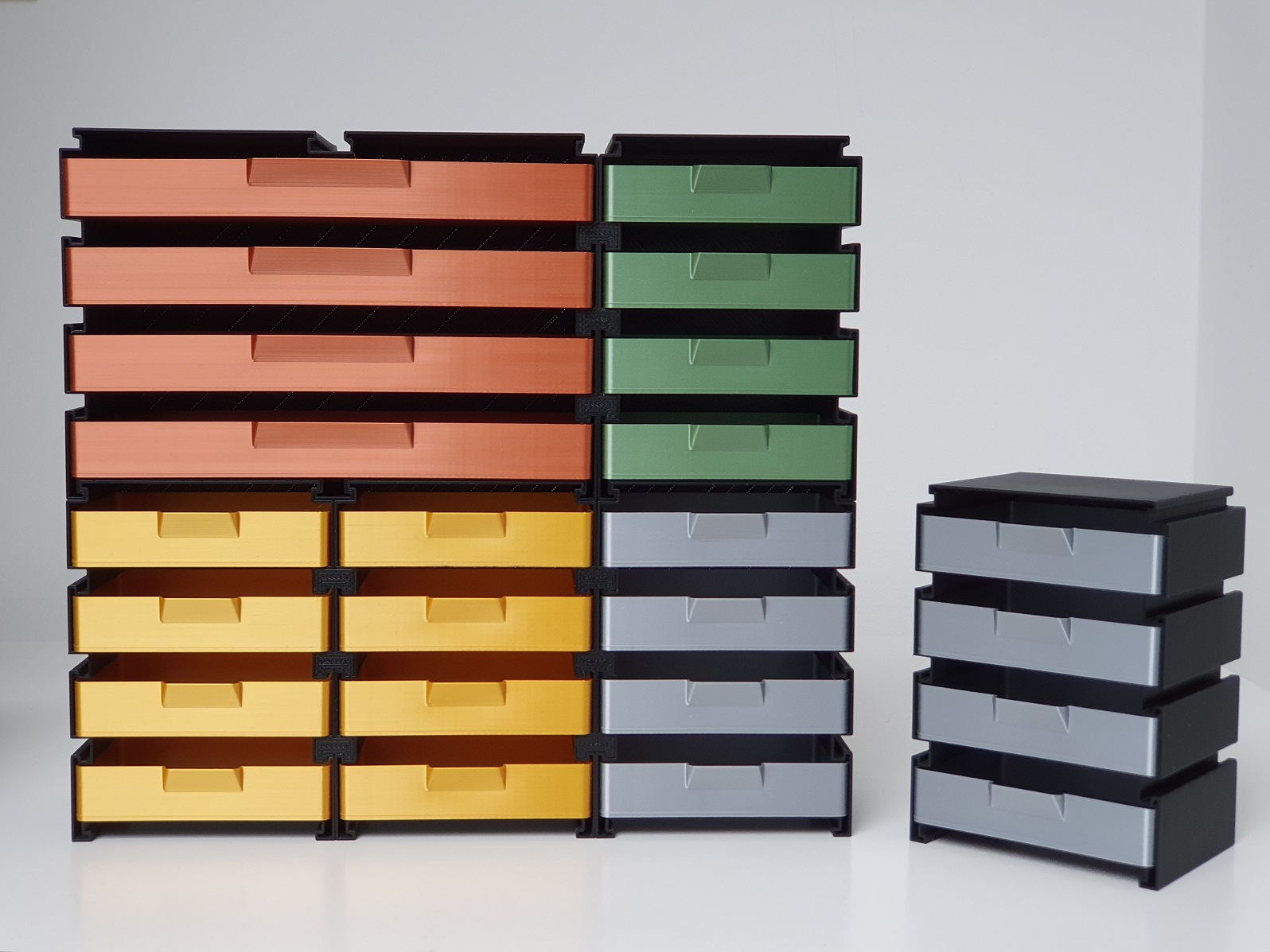
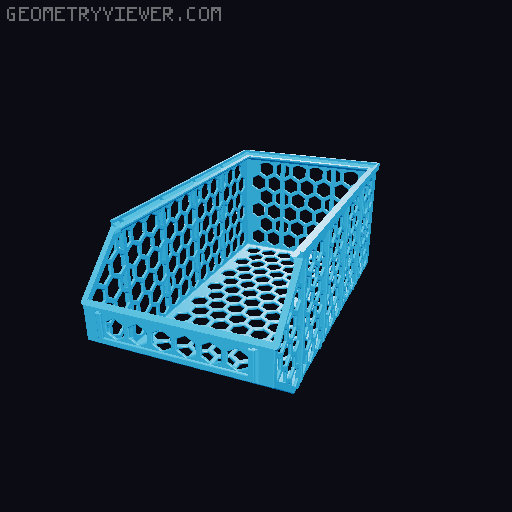
Stackable baskets in various sizes and two main variants. All sizes can be stacked on each other, as they are all 10cm wide (inside) and 7.5cm high. The depth varies between 10cm and 30cm. And the “feet” of the strengthening side bars lock into the little holes in the top frame if the lower basket. And all baskets have a slot to stick a paper label on the front. The honeycomb basket design saves a lot of filament compared to full boxes without sacrificing stability . But the baskets come in “full honeycomb” style or with a closed bottom (B variant), which can be useful especially if you want to store small parts. And if you apply some tweaks in the Slicer, the B variant doesn't even need more filament, see below. I had already published these baskets on Thingiverse (B variant here ) some time ago. The current models have all filleted edges, which is not only smoother (better haptic), but also slightly more stable as layers are slightly shifted for better bonding of multiple lines. Especially since the arrival of Arachne Slicers with variable line width, I always use this mode (supported by Cura, PrusaSlicer, BambuSlicer, OrgerSlicer and possibly more). If you still prefer straight walls without fillet, please download on Thingiverse. As you can see on the pictures, large baskets should be printed 45° rotated, this way even the 30cm box can be printed on a 30x30 print bed without problems. For variant B make sure you also change line directions for layers and infill by the same 45° for better results. Tweaks for Variant B (see photo): The bottom can be printed without bottom layer and only two top layers to save filament and print time (then variant B uses even less filament then the “full honeycomb” version). To achieve that in Cura, set the "initial bottom layers" to 0 (!). But ensure that the bottom frame is as stable as before by defining a modifier block around the bottom an enforce wall thickness of 2mm (only for bottom). Default infill of 20% (Cubic) is good enough. For the rest infill isn't relevant because of 1.6mm "walls" (i.e. 4 lines or only three if printed with line width of 5.34m@m (0.4mm nozzle)
Originally published on Printables