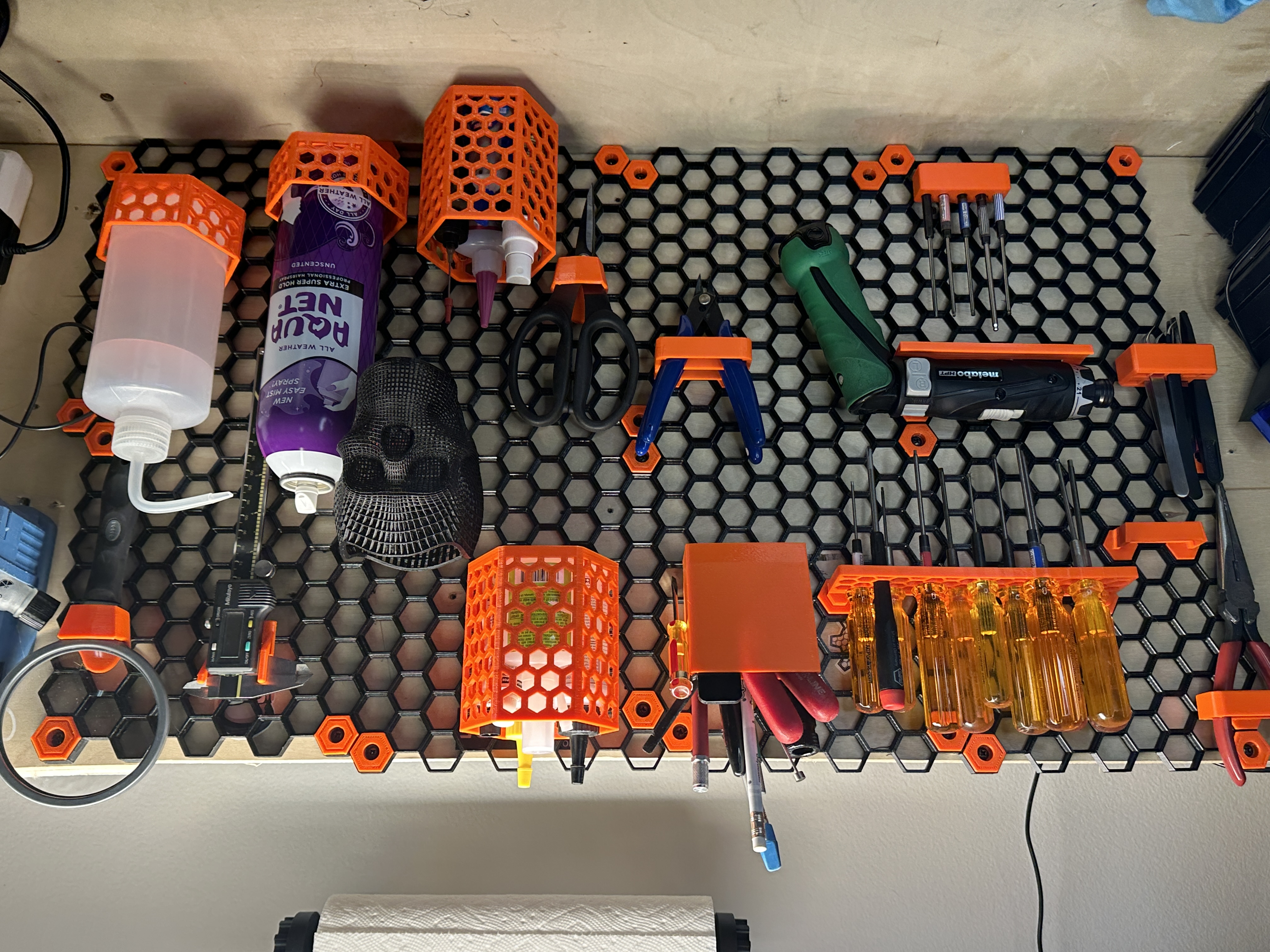
Sy's Peglock - Parametric Pegboard Attachment.
by Donovan Baarda · via Printables
| Format | STL |
| Category | Organisation |
| License | CC BY-SA |
| Triangles | 36.0k |
| Uploaded | Nov 6, 2023 |
⬇ 324 downloads
❤ 72 likes
👁 2.1k views
Description
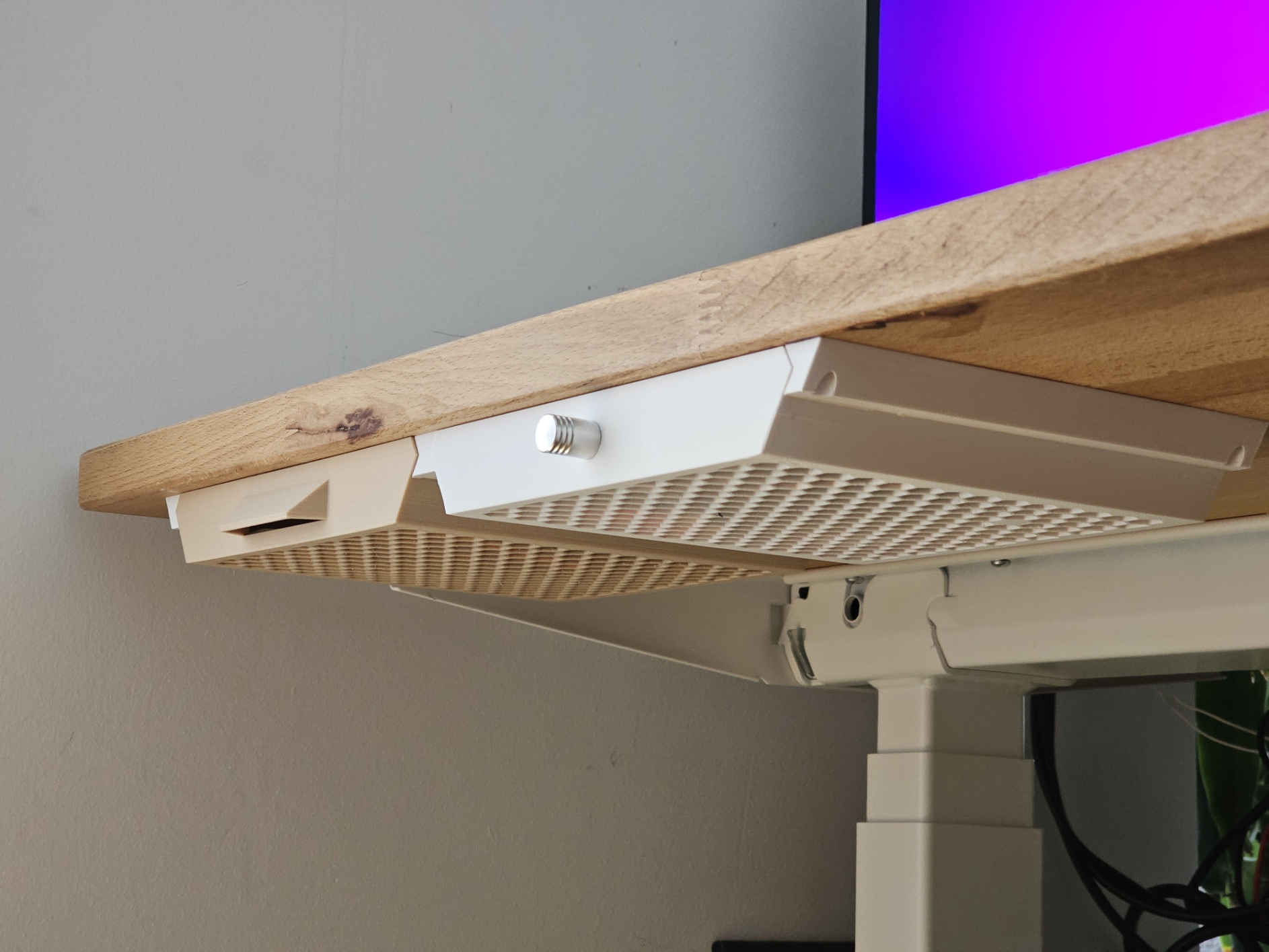
This is a remix of @ntressler7's excellent Peglock Board Attachment - Parametric Template , which was a remix of @SyberSpace's excellent Sy's Peglock - Locking Pegboard System . The triangular wedge shape is mostly unchanged and will work with the existing mount plate used by all the different mount attachments. Only the peg shape and parameters for defining them have been changed. I started with @ntressler7's parametric template of Sy's original design in Onshape, which I modifed to create a new parametric template. There are uploaded stl files for common board thicknesses and peg diameters that you can just use and should cover most applications. The naming of the stl files is in the form “Peglock Board Attachment v<version> <Body Width>-<Pegboard Thickness>-<Peg Distance>-<Peg Diameter>-<Peg Clearance>-<Magnet Diameter>-<Magnet Thickness>.stl”. If you have special requirements you can generate your own models. Modifying and exporting this model doesn't require you to sign up for any accounts or download any software. Just follow these instructions below (copied directly from @ntressler7's instructions)! Currently there are 7 parameters that are adjustable, but let me know if you need anything else to be adjustable and I can update it! Body Width - How wide the peg attachment body is. Don't change this if you want this to work with existing mount attachments. Pegboard Thickness - the thickness of the pegboard. The standard MDF boards are ¼" (6.35mm), but MDF “light pegboards” are 1/8" (3.175mm). Metal pegboards range between 0.5mm to 2mm, and I've even heard of 9mm thick pegboards. Peg Distance - the distance between pegs. The standard is 1" (25.4mm), but there are “metric pegboards" that actually use 25mm but in practice the difference is too small to matter. There are also ½" (12.7mm) “light” pegboards. Peg Diameter - the diameter of the pegs. The standard nominal size is ¼" (6.35mm), but 6mm is what Sy's used and there are many metal “metric pegboards" use 5mm. There are also 1/8" (3.175mm) “light” pegboards. Peg Clearance - how much larger the holes are than the pegs. In practice this defines the bottom peg “ball” size. The default of 0.5mm should be fine for most applications, but you might want to increase it for a stronger inteference fit “lock”. Setting this to zero will remove the locking “ball”. Magnet Diameter - the diameter of the magnet hole. The default 10mm will give a good interference fit for a 10mm diameter magnet, and will accommodate smaller diameter magnets. Setting this to zero will remove the magnet hole. Setting this to the same size as “Body Width” (6mm) triggers an unfortunate boundary condition (zero thickness wall) that breaks the magnet hole, so you will need to set it 0.1mm larger. Magnet Thickness - the thickness of the magnet hole. The default of 3mm will accommodate thinner magnets. Setting this too large will weaken the attachment. Directions Navigate to the Onshape Project Change the parameters as needed (Sy's original dimensions are the default as shown) 📷 Image redacted — claim this model to add your own media Right click on the Peglock Board Attachment part in the bottom left corner and click Export… 📷 Image redacted — claim this model to add your own media Choose STL as the format, adjust the other settings as you see fit, and click Export 📷 Image redacted — claim this model to add your own media
Originally published on Printables