W8BH Morse Code Tutor with M0UKD Capacitive Touch Key and Paddle
by M7SVB · via Thingiverse
| Format | STL |
| Category | Electronics |
| License | CC BY-SA |
| Triangles | 436 |
| Uploaded | Mar 17, 2026 |
⬇ 13 downloads
❤ 1 likes
👁 79 views
Description
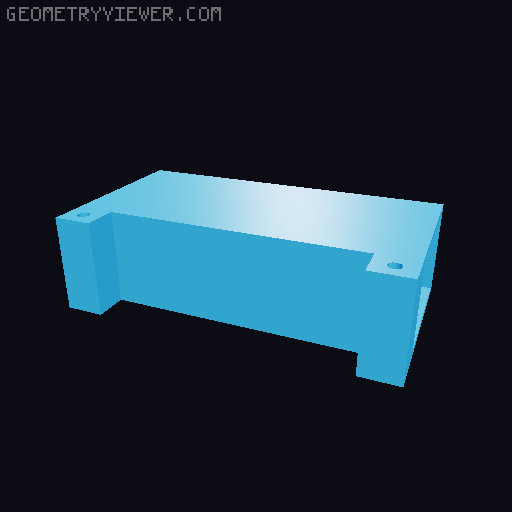
This Morse Code Tutor is a feature rich device for learning to receive and send Morse Code designed by Bruce E. Hall W8BH. A detailed 12 part tutorial on how to build and programme the Morse Code Tutor is available on his website http://w8bh.net/ This is a great project for anyone starting out in electronics and programming and is excellent fun to build and use This version includes a capacitive touch paddle based on a design by M0UKD detailed on his website https://m0ukd.com/homebrew/capacitive-cw-touch-key-circuits/ with a PCB designed by the late Ken Melvin KM4NFQ https://github.com/km4nfq/capacitive-touch-key . I chose to build a simple enclosure using acrylic panels attached to the main PCB using standoff spacers. Along with a custom designed mini paddle that attaches to the encoder, a simple holder for the PP3 battery and control knobs for the encoder and volume control were added. I used 5 pence coins as sensors for the capacitive paddle which are a challenge to solder wires onto, but with patience and a good amount of heat it is possible to get a good joint. The wired sensors are then glued into the recesses on the paddle using superglue having routed the connecting wires through their respective holes in the paddle. The completed paddle assembly can then be attached to the encoder and secure using the encoder's nut and washer. On both of the units I have built I found that I needed to increase the sensitivity of the right hand paddle sensor by increasing the value of C2 on the capacitive touch key board to 4.7nF. Once the sensitivity is set correctly the paddle does work extremely well. The key sensor board is attached to the main board using double sided foam adhesive pads to provide insulation to exposed pads on the main PCB. The key sensor board is powered via connection to the 3.3v and Grd lines on the STM32 board and consumes <1mA. The paddle connections J1, J2 and J3 are wired directly to the underside of the morse key jack on the main board. The holder for the PP3 battery has been sized to provide a light friction fit for ease of replacement. The holder also serves as a spacer for the left hand side of the tutor with M3 tapped holes top and bottom. 2 x 20mm M3 standoff spacers are used on the right hand side along with 4 x 5mm M3 spacers on the underside of the unit. The battery holder was printed horizontally on the bed with supports.
Originally published on Thingiverse