ZIP Whistle
by timcel · via Thingiverse
| Format | STL |
| Category | Other |
| License | CC BY-NC |
| Uploaded | Mar 9, 2026 |
⬇ 3.3k downloads
❤ 380 likes
👁 10.1k views
Description
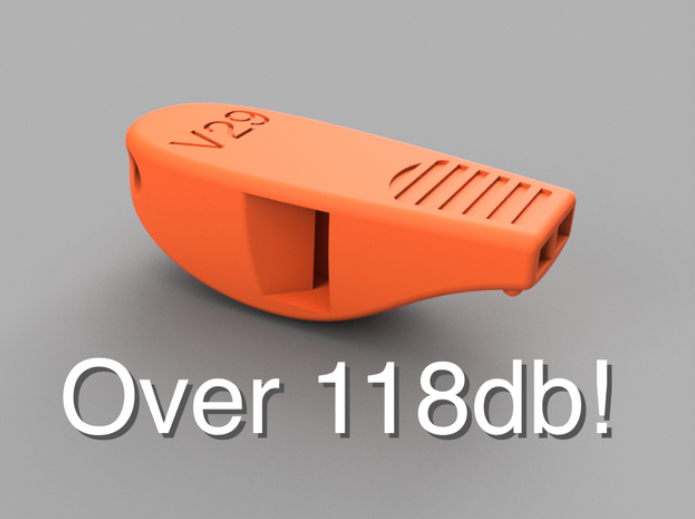
ZIP Whistle A little whistle you can attach to zippers, keychains, and bags. Perfect size for purse, backpack, key chain or as a zipper pull. Full, intense sound. An excellent safety and warning whistle. Many small whistles are shrill and very high pitched.The sound this whistle makes is sharp, resonant, loud and distinctive. More Whistles Too many whistles and more on the way. I'm a designer and, going with the flow for now. Want to 3D print more whistles? See my whistle designs in the WHISTLE WORKS collection... https://www.thingiverse.com/timcel/collections/43888798/things Other variations may be added in the future and I reserve the right to make this thing better in any way anytime I want. The bottom of this description has links to other whistle designs Why Whistles? Different whistles. Different tasks. This whistle is designed to warn of the presence of agents. It has an intense, distinctive sound. Every 3D printer owner can help by making lots of whistles to share with local organizations who distribute them. PS These whistles make excellent protest whistles. Print lots to bring to local events and share with fellow protesters. Whistle Design As a designer, I frequently use 3D printers for design development and prototyping. The goal for this project was to create a really good small, flat whistle with a rich, full, distinctive sound that 3D prints well and can be customized. Being a simple device, I assumed whistles would be easy. Wrong. Turns out designing a good whistle is hard. Probably one of the reasons I like it. Dozens of prototypes and weeks of development went into creating, testing and refining designs. The tone is sharp, full, distinctive and a bit uncomfortable. Unlike many 3D printed whistles, this one works with low and high pressure blowing. Fair warning: it is very loud. 110db - 115db. For comparison, a rock and roll concert can be 85lb-100db. Rolling Stones and heavy metal concerts a bit louder. So, be careful how and where you use a whistle and always be aware of how close you are to others when using it. Whistles may be a great warning tool, but use them responsibly. Pro tip: If you whistle often, ear plugs are a good idea. Printing These whistles are printed on the side for best print quality on the critical fipple, window slot, and a clean sound chamber. That leaves the bottom (which is printed on the side) available for customized messages. You can leave the bottom blank if you just want a NICE whistle, or add favorite slogans, or information for local groups and organizations. Printers used for testing Prusa XL, Prusa Mk4s, Prusa Mini, Bambu X1C, Bambu Mini. There are no reasons any well tuned modern printer won’t print whistles. Basic Settings Rafts: No Resolution: .15 or .16 depending on your slicer Infill: 15-20% Use a .4 nozzle. Smaller nozzles are not needed. Slow speeds down. Particularly first layers, outer walls, and top surfaces. Prints of its side so small surface area. A smooth plate and bed adhesive really help. But if you insist printing on a textured plate and the print gets knocked off the plate, add a 5mm brim. Notes Don’t assume this just another print and use your default settings. This whistle is small. Whistles are challenging to 3D print. to See notes below. Printing Techniques Printing small 3D models successfully requires a different approach. Because these models have a lot of vertical mass for their small size and a tiny contact area they can easily get knocked off the plate. So, I recommend the following… • When printing small models start with a clean, smooth plate and use bed adhesive • Slow things down. When printing small items, slow first layers, top layers, and outer walls. I usually run first layers at 30mm to insure a perfect first layer. PLA The model was designed to be printed with inexpensive PLA filaments. The idea is for you use left over spools so you can print lots of whistles with whatever filament you have around. Best to stick to regular PLA and not use filaments with added materials. IE carbon fiber, glitter, etc. Also avoid soft filaments like silks and some matte filaments as they’re more prone to stringing. For this project, it’s a good idea to dry your filament before printing. Wispy strings interfere with wire vibration and often cause a 3D printed whistle to not work. PETG certainly works but it is even more prone to stringing. Drying before printing in PETG is even more critical. The included 3MF files contain recommended print settings. Note that Prusa, Orca, Bambu and Cura slicers can open these same 3MF files and print settings will be included. Whistle Problems Turns out 3D printing any whistle can be challenging — particularly small whistles. I tested over a dozen available models before deciding to create my own. Some whistle printing problems are related to design. Some are specific 3D printing issues: layer bonding, stringing, retraction settings or filament issues. Wispy strings inside the sound chamber or in the window/fipple path can interfere with sound creation and projection. Stringing is often a symptom of wet filament. If you’re able, start by drying your filament. The next adjustment is to optimize printer retraction settings and to run retraction tests. Look for YouTube videos to help you test and adjust temperature and retraction settings for your particular printer. Next, make sure nozzle temperature is correct for the filament you’re using. To prevent air leaks, layer-to-layer adhesion must be perfect. A slight clog in your nozzle can create gaps between layers. Any air leak in the sound chamber can result in whistles not whistling. Always test print first Print out a single whistle to make sure it works well for you before committing to 10-50 at a time. What you're looking for is a full, resonant sound under low and high pressure blowing. No airiness. These whistles should deliver a crisp, sharp sound with little blowing pressure. If your printer is not well tuned or you have filament issues and your whistle doesn't whistle try these other changes: scale the model to 105 percent, change layer height, or adjust filament temperature. I have found that different filaments can sometimes give different results. When changing filaments I run a test before committing to large runs. I’ve printed almost a 1K so far and get best results by using simple, basic high quality filaments. If you have a problem, try a different filament. That might be enough Again, print single whistles until your settings are dialed in before committing to production. Test every whistle You never know if a whistle works until you try it. So, like ACME in the UK who have been making whistles since 1870, I test every whistle. Rather than blow through each whistle and pass along germs I use a bulb-type camera lens blower. Simple and it works great. Remember: Make lots of whistles to share with your community, groups, and protestors. Related Models PROTEST Whistle 1 ... https://www.thingiverse.com/thing:7288286 NICE Whistle 1... https://www.thingiverse.com/thing:7211638 NICE Whistle 2... https://www.thingiverse.com/thing:7282938 PEACE Pins... https://www.thingiverse.com/thing:7292294
Originally published on Thingiverse